Antelope Canyon vs Grand Canyon: Best Vegas Day Trip (2026)
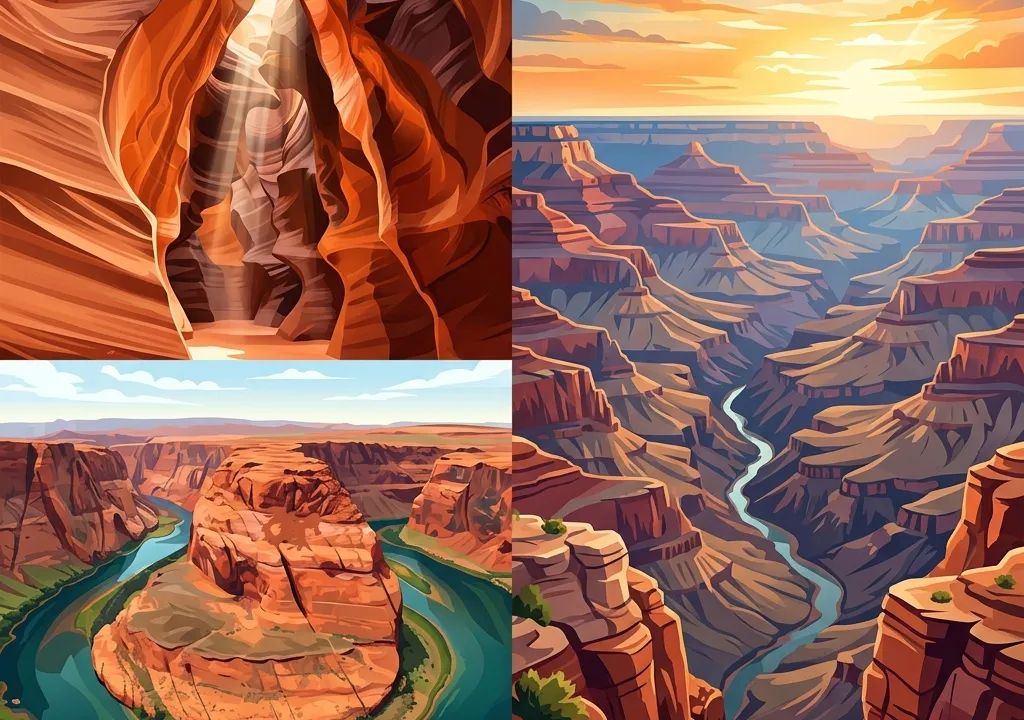
When travelers scroll through social media before a Las Vegas vacation, two mesmerizing natural wonders always steal the spotlight: the glowing orange slot canyon beams of Antelope Canyon with Horseshoe Bend, and the sweeping multi-layered vistas of the Grand Canyon.
For families planning their itinerary, deciding between these two Southwest icons is often the hardest choice of the trip. While both destinations are world-class natural wonders, they require vastly different driving commitments, entrance rules, physical exertion, and budget planning.
In this definitive 2026 comparison guide, we break down verified drive times from the Las Vegas Strip, Navajo tribal permit fees, physical ladder restrictions, and critical time-zone gotchas so you can pick the perfect Arizona excursion for your family.
1. The Quick 30-Second Verdict
If you need a fast decision before booking your tour or rental car, here is our bottom-line rule for Las Vegas travelers:
- Choose Antelope Canyon & Horseshoe Bend (Page, Arizona) if your primary goal is capturing surreal, once-in-a-lifetime photography inside glowing sandstone slot canyons, you don’t mind committing to a 12 to 14-hour full-day excursion (~4.5 to 5 hours driving each way), and all family members are comfortable climbing steep metal ladders or walking 1.5 miles in the open desert sun.
- Choose the Grand Canyon (West Rim or South Rim) if you have young toddlers or older grandparents who need an easier, more compact travel day (the West Rim Skywalk is only ~2.5 hours from Las Vegas), want the option to land on the canyon floor in a VIP sightseeing helicopter, or wish to use your America the Beautiful National Park pass at the classic South Rim.
2. Head-to-Head Comparison Table (Verified 2026 Data)
| Feature | Antelope Canyon & Horseshoe Bend | Grand Canyon (West Rim / South Rim) |
|---|---|---|
| Primary Location | Page, Arizona (Navajo Nation Land) | Hualapai Tribal Land (West) / Arizona NPS (South) |
| Drive Time from Las Vegas | ~4.5 to 5 hours one-way (~275 miles) | ~2.5 hours (West Rim) / ~4.5 hours (South Rim) |
| Round-Trip Day Trip Commitment | 12 to 15 hours (Full dawn-to-dusk day) | 6 to 8 hours (West) / 12 to 14 hours (South) |
| 2026 Guided Tour Requirements | 🚨 Mandatory Navajo Guide Required (Cannot enter slots independently) | Self-guided walking allowed along all rim trails |
| 2026 Entrance & Permit Fees | ~$60–$140+ per person (Canyon tour) + $8–$15 Navajo permit + $10 Horseshoe Bend parking | $99 per adult All-Access (West) / $35 per vehicle (South Rim NPS) |
| National Park Pass Valid? | ❌ No (City of Page & Navajo Nation land) | ❌ No at West Rim / ✅ Yes at South Rim |
| Physical Excursion Level | Moderate (Steep staircases/ladders in Lower Antelope; 1.5-mile sandy walk at Horseshoe Bend) | Easy to Moderate (Flat paved rim walks available) |
| Best For | Photography lovers, teens, adventure seekers | Families with toddlers, helicopter flyers, short itineraries |
3. Deep Dive: Antelope Canyon & Horseshoe Bend (Page, AZ)
Located near the town of Page in northern Arizona, Antelope Canyon is sculpted from Navajo sandstone by centuries of flash flooding. Just 10 minutes away sits Horseshoe Bend, a dramatic 1,000-foot drop where the emerald Colorado River makes a 270-degree curve around a sandstone mesa.
Upper vs. Lower Antelope Canyon: Which Should You Book?
Antelope Canyon is divided into two distinct sections. Knowing the difference before booking your 2026 tour is essential:
- Upper Antelope Canyon (“The Crack”): Famous for its iconic vertical light beams that pierce down to the sandy canyon floor during summer midday hours (roughly 10:00 AM to 2:00 PM). Shaped like an uppercase “A” (narrow at the top, wider at the bottom), it involves an easy, flat walk with zero stairs. However, standard tickets range from $90 to $140 per person, while prime-time light beam slots command $115 to $160+ per person.
- Lower Antelope Canyon (“The Corkscrew”): Shaped like a “V” (wider at the top, narrow at the bottom), this section offers brighter ambient colors and playful, twisting sandstone corridors. Entrance requires descending and ascending series of steep, narrow metal staircases and ladders. Operated exclusively by authorized outfitters like Ken’s Tours and Dixie’s Tours, base tickets are more budget-friendly at ~$60 to $95 per person.
- Mandatory Navajo Nation Permits: Under tribal law, no visitor can enter Antelope Canyon unaccompanied. Every ticket includes or requires an additional $8 to $15 Navajo Parks permit fee.
Horseshoe Bend Reality Check & Parking Rules
Many travelers mistakenly assume Horseshoe Bend is part of Grand Canyon National Park. In reality, the overlook and trailhead are managed by the City of Page:
- Vehicle Parking Fee ($10): All private vehicles entering the trailhead lot must pay a $10 fee (credit card or cash). Interagency National Park passes are not accepted.
- The Desert Walk: From the parking lot, you must walk 0.75 miles each way (1.5 miles round-trip) along an exposed, sandy desert path. There is zero shade along the trail, so carrying drinking water is mandatory year-round.
🚨 The #1 Las Vegas Tourist Gotcha: Arizona vs. Navajo Time Zones
If you drive from Las Vegas to Page for a scheduled tour, beware of your cell phone’s automatic time zone settings! While Nevada operates on Pacific Time, most of Arizona stays on Mountain Standard Time (MST) year-round without observing Daylight Saving Time. However, the surrounding Navajo Nation DOES observe Daylight Saving Time.
Because Antelope Canyon sits right on the tribal border next to Page, cell towers frequently cause tourist phones to jump ahead by an hour. All Antelope Canyon tour operators run strictly on Page, Arizona local time (MST). Always verify the local Page time manually and arrive at least 45 minutes prior to check-in to avoid forfeiting non-refundable tickets.
4. Deep Dive: The Grand Canyon Alternative
If a 14-hour excursion with strict tribal tour check-in windows feels too stressful for your family, the Grand Canyon provides two flexible alternatives:
Grand Canyon West Rim (~2.5 Hours Away)
Located just 125 miles from the Strip, the West Rim is the ultimate time-saving choice for Las Vegas visitors:
- Short Drive: You spend only 5 hours total in the car round-trip compared to 10 hours driving to Page.
- The Glass Skywalk: Experience walking 4,000 feet above the canyon floor on the transparent cantilever bridge ($99 All-Access Pass covers shuttle buses, viewpoints, and Skywalk entry).
- Canyon Floor Helicopters: Unlike National Park land where rim landings are banned by federal law, West Rim operators like Papillon and Maverick Helicopters can descend 4,000 feet to land next to the Colorado River for champagne picnics (~$479 to $599+ per person). Read our full comparison in our Grand Canyon West vs South Rim Guide.
Grand Canyon South Rim (~4.5 Hours Away)
If you are willing to drive 4.5 hours each way, the South Rim NPS offers classic, breathtaking multi-layered canyon panoramas with flat, paved walking trails (like Mather Point) for just $35 per vehicle for a 7-day pass.
5. Structured Excursion Options
If you prefer to let professional drivers navigate the desert highways while you relax with panoramic windows and onboard restrooms, here are the top tour structures departing Las Vegas resorts:
Option A: Full-Day Antelope Canyon & Horseshoe Bend Coach Tour
- Best For: Photography enthusiasts and travelers who want to check off two Southwest wonders in a single day without driving.
- Typical Duration: ~13 to 15 hours hotel-to-hotel (Early morning departure around 5:30 AM, returning around 8:30 PM).
- What to Expect: Luxury air-conditioned motorcoach transport from Las Vegas, scenic drive through Utah/Arizona landscapes, guaranteed Navajo-guided walking tour inside Lower or Upper Antelope Canyon, plus 1.5 hours to hike and photograph Horseshoe Bend.
- Approximate Cost: ~$200 to $270 per person (Includes Navajo permits and Horseshoe Bend entry).
Option B: 2-Day Overnight Page & Zion Road Trip
- Best For: Families seeking a relaxed pace without spending 10 consecutive hours inside a bus or rental car.
- What to Expect: Drive from Las Vegas to Page on Day 1, catching sunset at Horseshoe Bend. Stay overnight at a family hotel in Page, enjoy a morning light-beam tour at Upper Antelope Canyon on Day 2, and drive back through scenic Zion National Park corridor.
Option C: Grand Canyon West Express Coach Tour
- Best For: Families wanting the shortest, most efficient canyon adventure.
- Typical Duration: ~10 hours total hotel-to-hotel.
- What to Expect: Round-trip bus transport, photo stop overlooking Hoover Dam, and 4 hours exploring Eagle Point, Guano Point, and the Skywalk.
- Approximate Cost: ~$110 to $145 per person.
6. Family Travel Checklist & Safety Tips
- Check Ladder Stamina Before Booking: If traveling with toddlers, expectant mothers, or grandparents with knee issues, avoid Lower Antelope Canyon. Book Upper Antelope Canyon or Grand Canyon West Rim instead, where walking paths are completely flat.
- Pack Closed-Toe Walking Shoes: Sand inside Antelope Canyon is loose and powdery, while the trail at Horseshoe Bend consists of jagged sandstone and deep sand. Flip-flops and heels are dangerous and often banned by Navajo tour guides.
- Protect Camera Equipment: Fine red desert dust swirling inside slot canyons can jam camera lenses and smartphone ports. Bring a microfiber cloth and avoid changing interchangeable lenses inside the canyon.
- Hydrate Before You Hike: Desert humidity hovers below 15%. Carry insulated water bottles for every family member during the 1.5-mile trek to Horseshoe Bend.
7. Frequently Asked Questions
Can you do Antelope Canyon and Grand Canyon in one day from Las Vegas?
Attempting both Antelope Canyon (Page, AZ) and the Grand Canyon South Rim in a single day from Las Vegas requires over 12 hours of pure driving (~750 total miles) and is strongly discouraged. If you want to see both, book a 2-day overnight excursion or combine Antelope Canyon with Horseshoe Bend instead.
Why can’t I visit Antelope Canyon on my own without a guide?
Antelope Canyon is a sacred site situated within the sovereign Navajo Indian Reservation. Due to strict tribal regulations and the risk of sudden desert flash flooding inside narrow slot corridors, independent entry is strictly prohibited by federal and tribal law.
Which is better for photography: Upper or Lower Antelope Canyon?
Upper Antelope Canyon is world-famous for dramatic midday light beams penetrating the dark canyon shafts (best photographed June through August). Lower Antelope Canyon is brighter overall and offers playful, twisting sandstone curves and warm terracotta gradients throughout the entire day.
Can children join Antelope Canyon tours?
Yes, children are welcome on most standard Antelope Canyon tours. However, parents must supervise young kids closely on the steep metal ladders in Lower Antelope Canyon. Note that most Navajo tour companies charge the full adult rate for children occupying a seat.
8. Final Thoughts & Next Steps
If your dream Las Vegas vacation involves capturing iconic, vibrant orange slot canyon photos and peering over a dizzying 1,000-foot river horseshoe, dedicating a full day to Antelope Canyon and Horseshoe Bend is an experience you will cherish forever. However, if you want a shorter drive, transparent glass bridges, or helicopter canyon landings, Grand Canyon West Rim remains the undisputed king of Las Vegas day trips.
Looking for more expert ways to streamline your Las Vegas itinerary? Explore our Grand Canyon West vs South Rim Comparison Guide, our First-Time Vegas Checklist (2026), and our Perfect 3-Day Las Vegas Family Itinerary!
Combining Business with Adventure: Las Vegas Convention & Corporate Travel Resources
A substantial percentage of travelers exploring the American Southwest from Las Vegas are corporate delegates, tech founders, and executive teams extending their stay before or after major summits for high-level team retreats or weekend excursions. If your travel coincides with the city’s convention calendar, explore our strategic executive guides:
- Top 5 Las Vegas AI & Cloud Conferences (2026–2027 Guide): Key dates, attendee scales, and executive logistics for mega-summits like AWS re:Invent, Oracle AI World, and CES.
- Top 10 Biggest Las Vegas Trade Shows & Conventions (2026–2027 Ranked): Official attendance benchmarks and economic footprints across the city’s largest industry conventions.
- Top 6 Las Vegas Convention Centers: 2026 Size & Venue Guide: Comprehensive floor space rankings, high-tech amenities, and campus transit insights for major venues including LVCC and Venetian Expo.
- Las Vegas AI Corporate Travel Trends: How Silicon Valley is Redefining MICE: An executive analysis of how venture capital, AI startups, and Silicon Valley delegations are transforming Las Vegas corporate hospitality and travel.