CES 2027: Top Enterprise AI Trends & Executive Insights
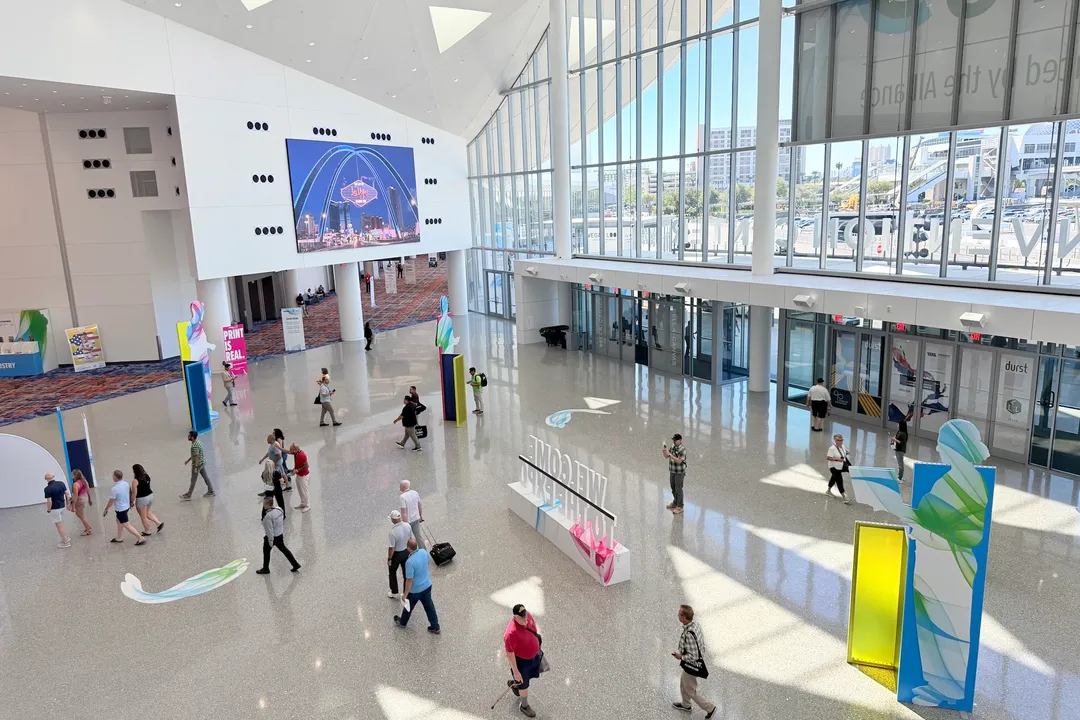
The Central Hall grand entrance concourse at the Las Vegas Convention Center (LVCC). Photo: LandingInVegas Editorial Team
LandingInVegas is an accredited media outlet covering CES 2027. The following is our independent executive briefing on macro enterprise technology trends.
At CES, enterprise artificial intelligence has decisively migrated out of the browser. The experimental phase of text-generating chatbots and isolated copilots has matured into capital-intensive, physical-world deployment.
For Fortune 500 CIOs, CTOs, and institutional investors, the summit serves as a litmus test for operational return on investment. The enterprise conversation across Las Vegas is anchored in four foundational pillars: physical automation, centralized vehicle silicon, on-device neural processing, and critical power infrastructure.
1. Physical & Embodied AI: Automating the Industrial Core
The most visible transformation across the Las Vegas Convention Center is the convergence of foundation models with physical machinery. Centered primarily in LVCC North Hall, the focus has shifted from consumer gadgets to industrial-grade automation designed to address persistent labor deficits.
Humanoid robotics and autonomous mobile robots (AMRs) are moving from laboratory proof-of-concepts into structured commercial pilots. Powered by multimodal vision-language-action (VLA) models, these systems perform spatial reasoning, autonomous pallet management, and factory-floor logistics without requiring rigid pre-programmed tracks.
For corporate leadership, the evaluation metric is no longer novelty; it is verifiable throughput, safety certification, and integration into existing enterprise resource planning (ERP) workflows.
2. Software-Defined Vehicles: Centralized Mobile Compute
LVCC West Hall has solidified its role as a premier global transport summit. The automotive industry has reached an architectural turning point: dismantling dozens of disconnected Electronic Control Units (ECUs) in favor of centralized zonal compute.
The show floor reflects an intense platform rivalry between semiconductor leaders:
- NVIDIA (DRIVE Thor): Delivering up to 2,000 TOPS of compute, Thor leverages Multi-Instance GPU architecture to run autonomous driving algorithms, digital instrument clusters, and in-cabin AI models simultaneously on a single centralized system-on-chip.
- Qualcomm (Snapdragon Digital Chassis): Championing performance-per-watt efficiency with platforms like Snapdragon Ride Flex and Cockpit Elite, Qualcomm targets thermal optimization and lower power draw to preserve battery range across high-volume electric and hybrid commercial fleets.
Automotive OEMs and tier-1 suppliers are prioritizing these unified platforms to enable continuous over-the-air (OTA) feature upgrades, transforming passenger vehicles and commercial transit fleets into continuously monetizable digital assets.
3. Edge Silicon & On-Device NPUs: The Enterprise Privacy Moat
Enterprise leadership is growing increasingly cautious regarding cloud reliance. Concerns surrounding bandwidth costs, network latency, and public cloud data exposure have triggered an aggressive shift toward on-device inference.
Across enterprise hardware showcases, low-power Neural Processing Units (NPUs) are now standard architecture inside executive laptops, ruggedized field tablets, and spatial computing interfaces:
- Data Governance: On-device models allow confidential corporate analytics, legal discovery, and internal communications to process locally without transmitting sensitive packets off-premises.
- Zero-Latency Execution: Localized silicon eliminates network round-trip delays, powering immediate voice transcription, edge vision inspection, and autonomous decision-making even in air-gapped or low-connectivity environments.
4. The Infrastructure Reality: Power Grids & Thermal Limits
Behind the enthusiasm for artificial intelligence lies an inescapable physical barrier: electrical power and thermal dissipation. Compute capacity at scale is now strictly governed by the laws of thermodynamics.
Behind the scenes at CES, enterprise IT buyers are evaluating the physical backbone required to keep next-generation clusters operational:
- Direct-to-Chip Liquid Cooling: As rack power densities exceed 100 kilowatts, traditional air cooling has become obsolete for top-tier training and inference clusters.
- Commercial Microgrids & Clean Power: Data center operators and commercial real estate developers are negotiating dedicated onsite energy generation, high-capacity battery storage, and modular power infrastructure to bypass public utility queue delays.
5. Where Enterprise Deals Close: Private Hospitality Suites
While general product showcases occupy the public halls, the most consequential commercial agreements at CES rarely occur on the open trade show floor.
High-level enterprise partnerships, multi-million-dollar silicon contracts, and confidential technology roadmaps require complete acoustic and visual privacy. Following official CES guidelines, major technology corporations and institutional venture funds establish private headquarters inside luxury tower suites:
- Wynn & Encore Tower Suites: The preferred setting for confidential C-suite negotiations, investor syndicates, and executive dining.
- The Venetian & Palazzo Suites: Widely utilized by hardware scale-ups and platform providers seeking immediate proximity to Tech West and Eureka Park.
- ARIA Sky Suites: The primary hub for executive meetings surrounding digital media, advertising infrastructure, and strategic partnerships.
These controlled environments allow executive teams to conduct confidential demonstrations under standard Non-Disclosure Agreements (NDAs), away from the ambient noise and congestion of the exhibition floor.
Executive Summary Matrix
| Technology Pillar | Primary Venue Hub | Strategic Focus & Architecture | Enterprise Decision Driver |
|---|---|---|---|
| Physical & Embodied AI | LVCC North Hall | Humanoid automation, industrial AMRs, vision-language-action models | Labor shortage mitigation, warehouse throughput, safety compliance |
| Software-Defined Vehicles | LVCC West Hall | Centralized compute (NVIDIA Thor vs. Qualcomm Digital Chassis) | Zonal architecture consolidation, over-the-air fleet monetization |
| Edge Silicon & On-Device NPUs | Tech East & Central Hall | Local neural processors in enterprise endpoints and laptops | Zero data leakage, strict corporate governance, sub-second latency |
| Infrastructure & Cooling | Tech East & Partner Hubs | Liquid immersion cooling, high-density racks, onsite microgrids | Overcoming power grid bottlenecks, thermal dissipation efficiency |
| Executive Dealmaking | Wynn, Venetian & ARIA Suites | Private hospitality suites, confidential NDA roadmaps | High-stakes vendor selection, strategic capital allocation |
About the Author | Hao Qian, PhD
Hao Qian is the Founder & Editor-in-Chief of LandingInVegas.com. Holding a Ph.D. in Computer Science with a background as a Silicon Valley technology leader, he provides analytical executive briefings on the intersection of artificial intelligence, luxury hospitality, and enterprise MICE logistics. He holds official accredited media credentials for major global summits including CES, Money20/20 USA, IMEX America, Global Gaming Expo (G2E), The SEMA Show, and AAPEX.
Read Full Editorial Bio & Press Credentials →More Executive Resources
- CES 2027 Las Vegas: The Executive VIP Guide
- Top 10 Biggest Las Vegas Trade Shows & Conventions (2026–2027 Ranked)
- Top 5 Las Vegas AI & Cloud Conferences (2026–2027 Guide)
- Top 6 Las Vegas Convention Centers: 2026 Size & Venue Guide
- Las Vegas AI Corporate Travel Trends: How Silicon Valley is Redefining MICE
- Beyond Efficiency: Why Trust is the Ultimate Gatekeeper for AI in Banking (Money20/20 Executive Briefing)